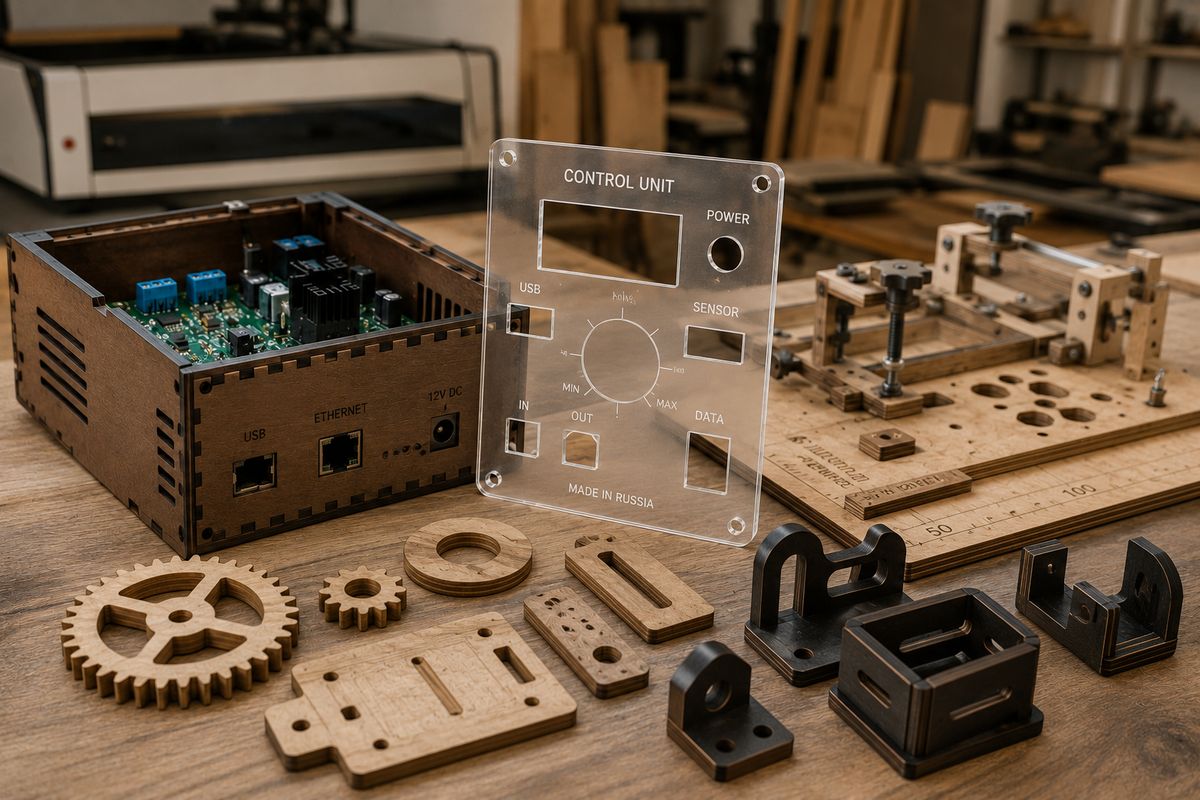
We machine thick sheet materials on CNC routers: slots, pockets, rounded edges, custom inserts and relief. Where the laser runs out of thickness, the router takes over — up to 20 mm on a 2000×3000 mm bed.
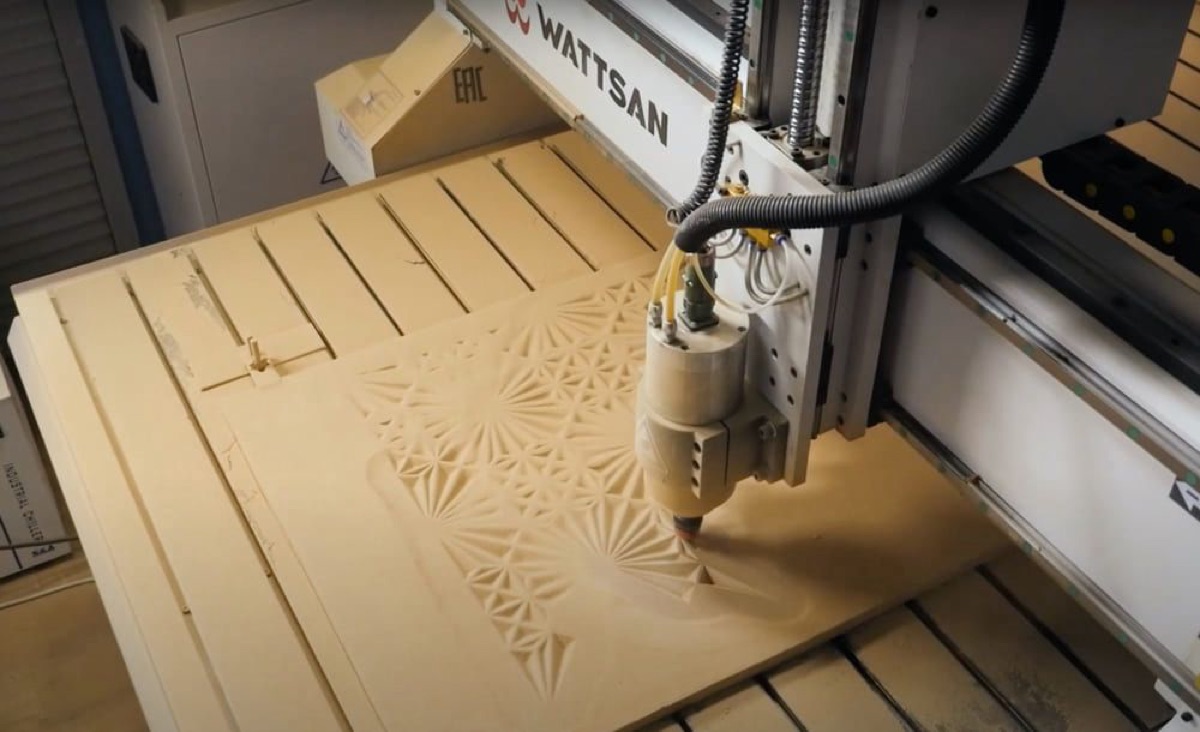 Milling station · CNC 2000×3000
CNC routers with a 2000×3000 mm bed handle what the laser can't: cutting thick boards, machining pockets and custom inserts, 3D relief. Machining runs in several passes — from rough pocketing to a finishing pass that removes the tool marks.
For each material the process engineer selects the cutter and the settings: spindle speed, feed rate, depth of cut. That determines the surface finish — parts go on to sanding and painting with no manual rework.
The router works in depth: where the laser cuts a contour, the cutter removes volume.
Surface finish depends on the material and settings — a finishing pass removes the tool marks.
| Parameter | Value |
|---|---|
| Materials | MDF 6–16 mm, plywood up to 20 mm, solid wood, plastics, composites |
| Working bed | 2000×3000 mm |
| Machining depth | Up to 20 mm, multi-pass pocketing |
| Operation types | Sheet cutting, slots, pockets, 2D/3D relief, profiled edge |
| Billing unit | Machine hour: price depends on removal volume and surface finish |
The more material to remove and the higher the finish requirements, the longer the machine time — send your file and we'll quote it exactly. Billing unit: per machine hour — details in Pricing.
Approval at every step: you see the product before the run starts.
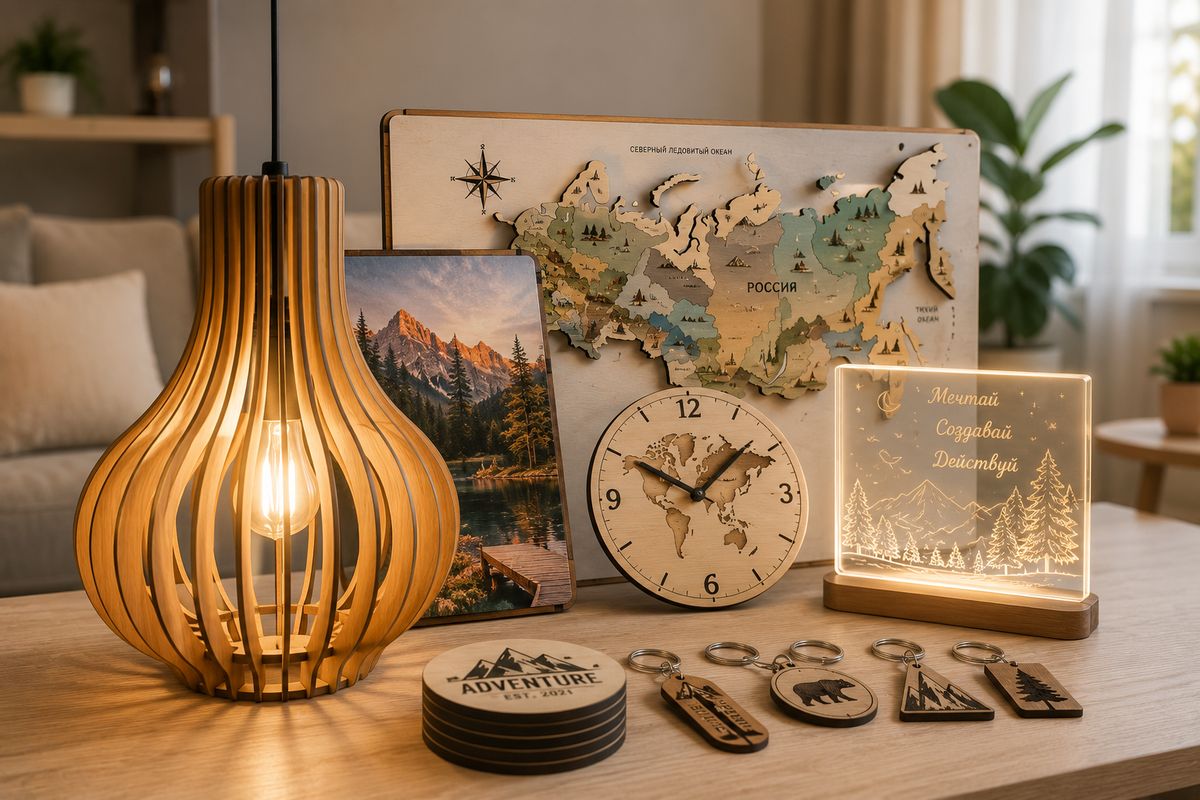
Thick and three-dimensional products: from custom inserts to interior wall art.
Every operation happens under one roof — your order is never passed between subcontractors.
We'll select cutters and settings, and return a price and lead time within one business day.
A process engineer reviews your file and selects material and settings; a manager returns with price and lead time.